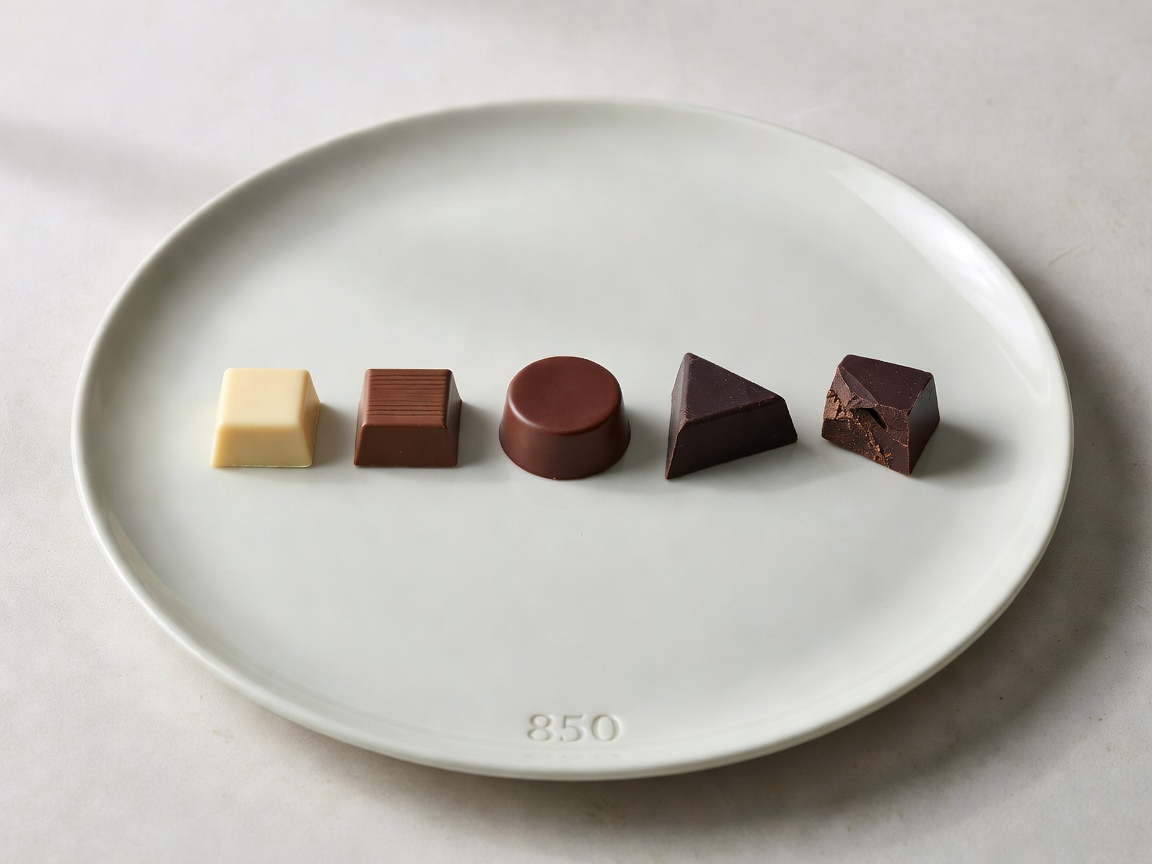
Begin with appearance
Look at the surface before tasting. Note whether it appears smooth, matte, patterned or uneven. Observe the color as a description, not a quality score: recipes and ingredients produce different shades. If tasting filled pieces, notice the shell, visible inclusions and shape. Surface bloom or marks may have several causes, so appearance alone does not establish how a chocolate was made or stored.
Notice aroma before the first bite
Bring a small piece near the nose and take a gentle breath. Write down the first impression, then try again. Possible everyday descriptors include roasted, nutty, fruity, floral, milky, caramel-like or spicy. These are personal sensory notes, not proof of a specific ingredient or origin. Avoid trying to identify every note; a simple comparison is more useful than a long list.
Texture, sweetness and bitterness
Let a small piece soften and notice how it changes. Is it firm, smooth, creamy, waxy, crumbly or grainy? Consider how quickly it melts and whether inclusions alter the mouthfeel. Texture can be affected by recipe, processing and storage, so one sensation does not explain the whole production method.
Sweetness and bitterness are separate impressions. A chocolate can taste sweet while still having a strong cocoa character. Dark chocolate may show more pronounced bitterness than a sweeter milk style, but recipes differ. Note whether the flavor feels balanced to you rather than assigning a universal standard.
Acidity can appear as a bright or tangy impression, especially in some cocoa profiles or fruit fillings. It is a sensory observation, not a health claim. Cocoa intensity describes how strongly cocoa character comes through to the taster; it is not the same as a verified cocoa percentage.
Follow the finish
After swallowing, pause. Note which flavors remain, how long they last and whether the finish changes. A lingering nut, fruit, roast or spice impression can distinguish two pieces that seemed similar at first. Keep the language practical: “short, roasted finish” is easier to compare later than an elaborate description.
Different styles, different cues
Milk chocolate often brings dairy and sweetness alongside cocoa. Dark chocolate can emphasize roast, bitterness or fruit-like impressions, depending on its ingredients and production. White chocolate has cocoa butter but no cocoa solids; its character may be creamy, sweet, vanilla-like or buttery.
Filled chocolate combines shell and center, so taste both together and separately if practical. Nut-based pieces may add roasted aroma and a crisp or smooth texture. Fruit-based fillings can bring tartness and moisture. Spiced chocolate may show warmth or aromatic notes that build after the first taste. These are useful expectations, not guarantees.
Build a tasting sequence
Arrange samples from lighter or milder impressions toward stronger, more aromatic or filled examples. Taste small portions. Pause between samples and drink plain water. A neutral break can help reset attention; strongly flavored food or drinks may influence the next sample. There is no single compulsory order, especially when the purpose is to compare a particular ingredient.
Practical tasting checklist
- Record sample name or identifying mark, if known.
- Describe appearance and first aroma in a few words.
- Notice texture, sweetness, bitterness and any acidity.
- Identify cocoa character, filling or inclusions.
- Pause and describe the finish.
- Write a preference separately from sensory observations.
Good for: Beginners, tasting groups and anyone comparing filled and plain chocolate without relying only on labels.
What to know: Ask about allergens before tasting. Use ingredient information from the organizer when available; sensory impressions cannot reliably identify allergens or ingredients.
Related guides
Make comparisons useful
Keep notes short and repeatable.
Use the ingredient guide to understand what may shape a chocolate’s texture and flavor.
Explore cocoa ingredients